
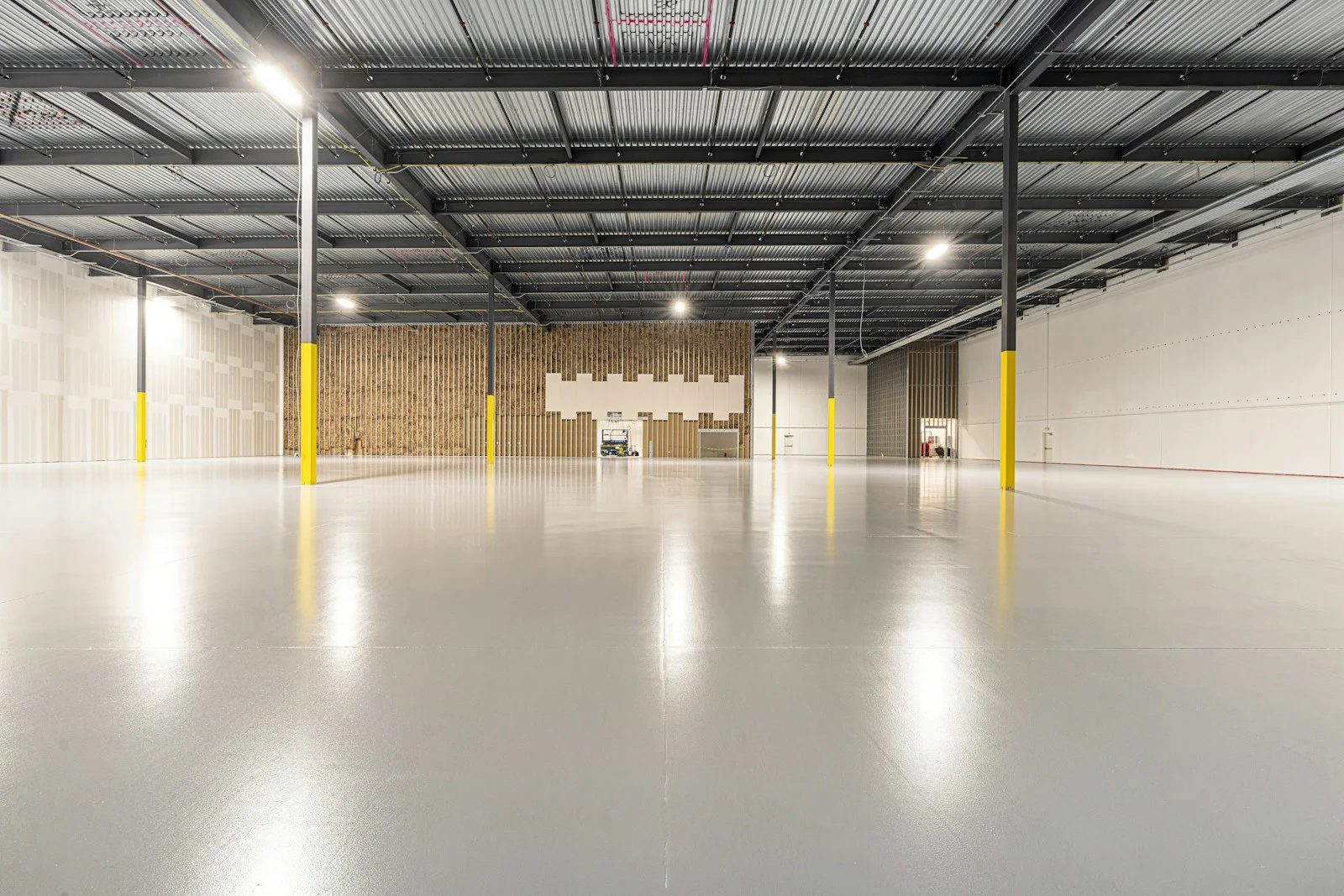
What Polished Concrete Is — and why the slab matters
Polished Concrete is a finish created by progressively refining the surface of a concrete slab with abrasives until you reach the desired sheen and texture. Because the result depends on the slab itself — its mix, aggregates, patching and moisture history — suitability and final appearance are slab-, use- and product-specific. That means the first decision is always about the existing concrete condition, not just the look you want.
How the process works in plain terms
Polishing uses rotating heads with diamond abrasives at multiple grit stages. Between stages technicians may apply a densifier that reacts chemically to harden the top layer; a protective treatment or topical sealer can be added later if extra stain resistance or sheen control is desired. The alternative often compared to polishing is grind and seal, which uses mechanical preparation followed by an applied sealer or coating rather than progressive abrasion and densification.
When polished concrete is a practical choice
Polished concrete can be a strong option when you want a hard-wearing floor that retains visible aggregate or achieves a refined, low- to high-gloss look without adding separate tiles or sheet goods. It works well for commercial showrooms, warehouses with traffic, and contemporary homes — provided the slab is suitable and the expected traffic, chemical exposure and cleaning routines are considered. For floors needing heavy chemical resistance or where the slab is very uneven or cracked, coatings or a grind-and-seal approach may be more appropriate.
Design and texture decisions: gloss, aggregate and traction
Polish levels range from a low-sheen finish to higher gloss. Sheen changes how light, dust and surface marks appear. The amount of aggregate exposed is another design decision, but visible aggregate does not automatically mean a rougher or more slip-resistant surface: mechanically polished concrete is refined smooth. Discuss wet areas, oils, foot traffic and equipment with your installer. Finish selection, housekeeping and any compatible protective treatments should suit the intended use rather than rely on appearance alone.
Manufacturer-backed basics and product considerations
Epoxy can be smooth solid color or aggregate-broadcast textured; decorative vinyl flake is different from sand or quartz broadcast and behaves differently in service. Polyaspartic may be used either as a binder or a topcoat in fast-curing systems — product roles vary by manufacturer. Product-specific UV resistance, curing, preparation and moisture requirements must be checked for any coating or treatment. Grind and seal uses mechanical prep and an applied sealer/coating, while polishing progressively refines the concrete with abrasives and often uses a densifier and protective treatment. Every product choice should be evaluated against the slab condition, expected use, and environmental factors like seasonal moisture.
Routine cleaning and realistic expectations
Polished concrete is straightforward to keep clean with regular dry dust mopping and periodic wet cleaning using pH-neutral cleaners recommended for treated concrete. Avoid abrasive scrubbing pads or strong acid cleaners unless the product manufacturer specifies them. Rather than promising absolute outcomes, plan for periodic inspections and reapplication of topical protective treatments if your environment has heavy staining risks or chemical exposure.
Practical planning and care questions to ask before you decide
Before choosing a finish, discuss the slab’s age, repairs and patching, and ask whether moisture testing is needed. Explain the traffic, equipment, oils, salts and other exposures the floor will face. Review sample finishes and gloss levels, and ask how visible wear and cleaning will be managed. Make sure the installation plan accounts for your downtime tolerance and that someone is responsible for routine cleaning and periodic inspection of protective treatments.
Next step — a local evaluation and consultation
A short on-site evaluation is the most effective way to match finish options to your slab and how the space will be used. If you’d like help assessing a residential garage, retail space, warehouse or lobby, call DiFranco Epoxy for a consultation: (440) 862-6056 or email ddifranco@idepoxy.com. Stock images are illustrative and not DiFranco projects; a brief site visit will clarify what’s realistic for your floor and operational needs.
Further reading
- Decorative flake, polyaspartic and quartz systems — Sika
- Smooth and aggregate-broadcast epoxy systems — Sika
- Plain, polished and sealed concrete — Sherwin-Williams
General guidance only. Product requirements and site conditions determine the final flooring specification. Stock photography is illustrative and is not presented as a DiFranco installation or a named color example. Photo license.