
Start with the way you use your space
Choosing a floor is about more than finding a finish that looks good on installation day. A residential garage sees vehicle traffic and tracked-in grit. A basement may have different moisture conditions. A commercial space needs a surface selected for its traffic, cleaning routine, and the materials used there. Before comparing epoxy and polyaspartic flooring, list the demands your floor will face.
For Northeast Ohio property owners, snow, rain, and seasonal changes make that conversation especially useful. The right choice depends on the concrete and the complete coating system, not simply the name of one resin.
Epoxy and polyaspartic are different tools
Epoxy flooring can create a bonded, seamless coating over properly prepared concrete. Depending on the system, it may have a solid-color appearance or contain decorative flake. Polyaspartic coatings are used in certain fast-curing flooring systems and can also serve as a protective topcoat. Some systems combine different materials in separate layers.
Cure time, UV stability, application conditions, and resistance to wear or chemicals are product-specific. A fast-curing option is not automatically the best fit for every slab. Ask which layers are proposed, why they suit the space, and what return-to-use instructions apply. Avoid assuming every floor can be driven on the same day.
The foundation is concrete preparation
A floor coating needs a suitable surface to bond to. Existing coatings, contaminants, weak concrete, cracks, and moisture all need to be evaluated. Mechanical grinding or another specified preparation method may be needed to create the profile required by the selected system.
Preparation is not just a cosmetic step. Covering a problem does not solve it. During a consultation, discuss the condition of the slab and whether repair or moisture-management work is needed before installation. The product manufacturer's requirements should guide the final specification.
Make color and texture part of the plan
A blend such as Domino or Feather Gray can be a starting point when comparing decorative flake options. View the actual samples alongside your walls, cabinets, and lighting. A digital swatch is useful for narrowing choices, but it cannot guarantee the exact appearance of a finished floor.
Ask about surface texture as well as color. Smooth finishes and textured systems behave differently during cleaning and when wet. No floor should be treated as slip-proof. Choose a practical balance of appearance, traction needs, and maintenance rather than relying on a coating label alone.
Get a project-specific recommendation
DiFranco Epoxy works with residential and commercial customers in Northeast Ohio. Bring your questions, approximate floor area, and a description of your space to a free consultation. Together, we can explore the finish, preparation, and color options that fit your project. Call (440) 862-6056 or email ddifranco@idepoxy.com to get started.
Further reading
- Decorative flake, polyaspartic and quartz systems — Sika
- Smooth and aggregate-broadcast epoxy systems — Sika
- Plain, polished and sealed concrete — Sherwin-Williams
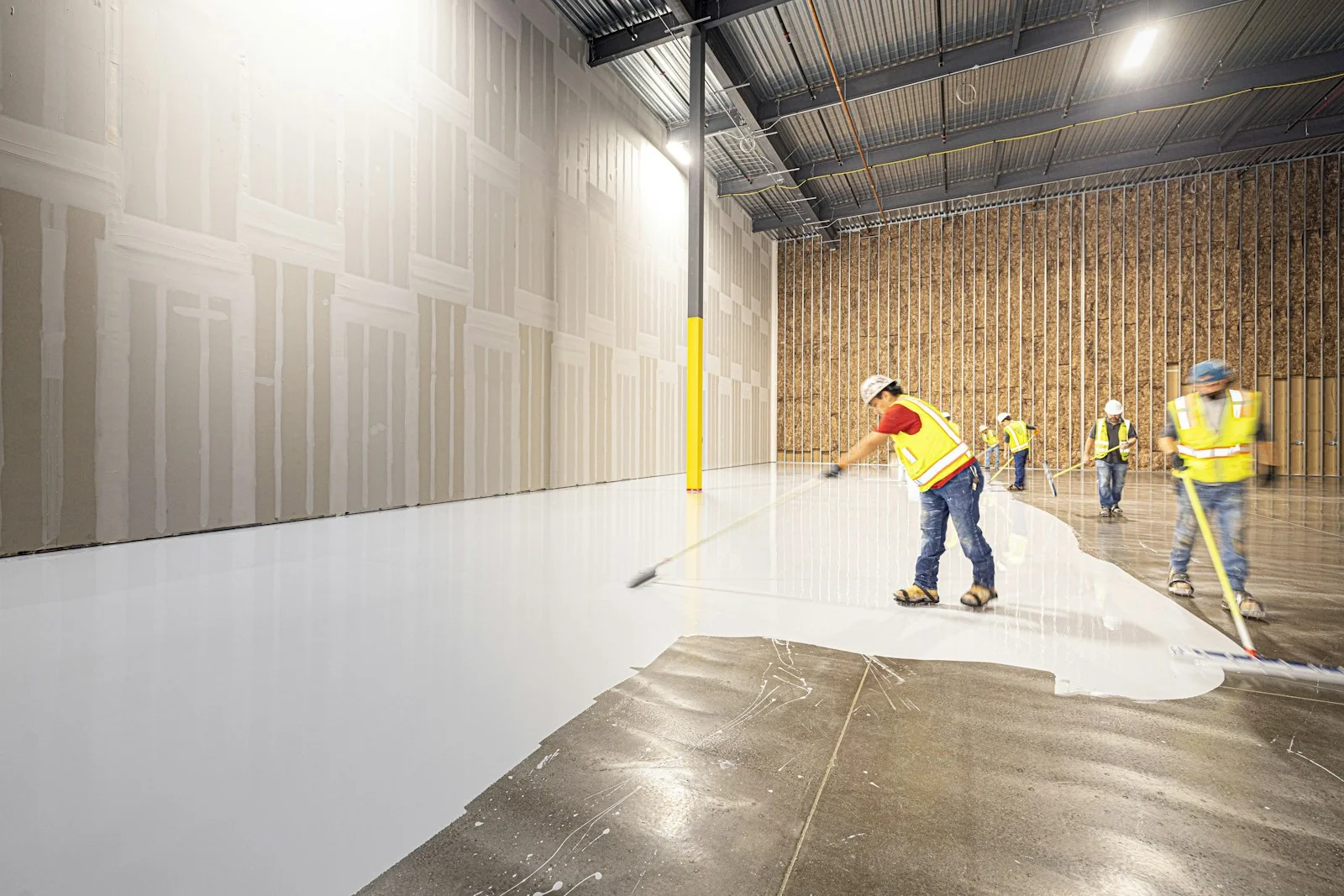
General guidance only. Product requirements and site conditions determine the final flooring specification. Stock photography is illustrative and is not presented as a DiFranco installation or a named color example. Photo license.
This starter archive entry was added during the blog launch with an editorial archive date. Updated October 9, 2026.